Ethiopia's Simien Mountains are one of Africa's most dramatic trekking destinations, rising to over 4,500 metres above the northern highlands. Crossing this UNESCO World Heritage landscape on foot means navigating volcanic ridges and sheer cliffs while encountering rare wildlife, ancient villages, and cultures unchanged for generations. This guide covers route options, gear, altitude safety, cultural encounters, accommodation, and everything else you need to plan a successful journey.
Ethiopia's Simien Mountains don't ease you in gently. They announce themselves with sharp ridges and staggering cliffs that drop hundreds of metres without warning, green plateaus catching the morning light, and summits that seem to disappear into clouds. This is the northern highlands at their most theatrical: a volcanic landscape sculpted over millions of years into something that looks almost invented. Trekking here means walking paths worn down by centuries of local foot traffic, sleeping under skies dense with stars, and arriving at viewpoints most travellers will never see.
The Simiens are home to rare endemic wildlife, including the Gelada baboon and the endangered Walia ibex, alongside remote Amhara farming villages where highland life carries on as it has for generations. For anyone drawn to dramatic landscapes, deep cultural encounters, and a genuine physical challenge, crossing the Simien Mountains on foot belongs on the shortlist. But this is a serious undertaking. The terrain is remote, the altitude demands respect, and the weather changes fast. Done well, with the right preparation and an open mind, it's the kind of trip that stays with you for a long time.
Why the Simien Mountains are so special
The Simiens are often called the "Roof of Africa," a nickname earned as much by geography as by altitude. Ethiopia's highest peak, Ras Dashen, tops out at 4,550 metres and sits at the heart of this range. But what really sets the Simiens apart is the character of the landscape itself: volcanic basalt eroded over millions of years into jagged pinnacles, plunging gorges, and wide alpine meadows dotted with wildflowers and giant lobelia plants that grow nowhere else on Earth.

The cliffs here can drop over a kilometre in a single step of the terrain. Combined with the endemic wildlife and active highland farming communities, the result is a trekking experience that's genuinely hard to compare to anything else in Africa.
Planning your Simien Mountains trek
Best time to go
The dry season, from October to March, offers the clearest skies, the most stable weather, and the best trail conditions. April through September brings heavy rains that make paths slippery and cloud out many of the most famous viewpoints.
Daytime temperatures at lower altitudes typically range between 10°C and 22°C. Above 3,500 metres, nights can drop well below freezing, so layering is essential year-round.
Permits and entrance fees
The Simien Mountains are a UNESCO World Heritage Site and a gazetted national park. Trekkers must pay an entrance fee at the park headquarters in Debark before starting their route. As of 2024, the foreign visitor entrance fee is approximately $50 USD, with additional daily charges for guides, scouts, and camping.
Guides and scouts
All treks in the Simien Mountains require a licensed guide and an armed scout. This is non-negotiable for both safety and the protection of the park's fragile ecosystem. Most guides and scouts are hired through the national park office in Debark. A good local guide brings more than navigation skills; they'll share the natural and cultural history of the mountains in ways no guidebook can replicate.
Choosing your trekking route
Most trekkers start in Debark, the park's gateway town, and travel east toward Ras Dashen. Route length depends on your time and fitness level:
- Short trek (2-3 days): Debark to Sankaber and back, covering highlights like the Jinbar Waterfall and early Gelada sightings.
- Classic trek (4-5 days): Debark to Chennek, taking in the Geech camp and the extraordinary Imet Gogo viewpoint.
- Full crossing (7-10 days): The complete route to Ras Dashen summit, finishing near Mekarebya or beyond. This is the most rewarding option for those with time and a solid fitness base.
Longer routes reveal more of the mountain villages and remote highland landscapes that make the Simiens genuinely distinctive.
How difficult is the Simien trek?
The trek rates moderate to hard. The trails themselves are well-established, but daily distances of 10 to 20 kilometres, combined with altitude and elevation change, demand a reasonable fitness base. The highest camps sit above 3,600 metres; some passes exceed 4,000 metres.
If you haven't trekked above 3,000 metres before, build in one or two acclimatization days at Debark or the lower camps before pushing higher. Altitude affects everyone differently, and the mountains will still be there tomorrow.
What you'll see: highlights of the trek
The Simiens deliver something memorable on most days of the route. Here are the standout moments you can look forward to:
Imet Gogo viewpoint
At 3,926 metres, Imet Gogo is widely considered one of the finest viewpoints in Africa. The view opens over a sea of cliffs, rocky towers, and deep valleys. Sunrise from here is particularly extraordinary.
Jinbar Waterfall
Dropping approximately 500 metres into a deep gorge, Jinbar is most dramatic during or just after the wet season. The roar of the falls and the cool mist make for a memorable rest stop.
Chenek camp
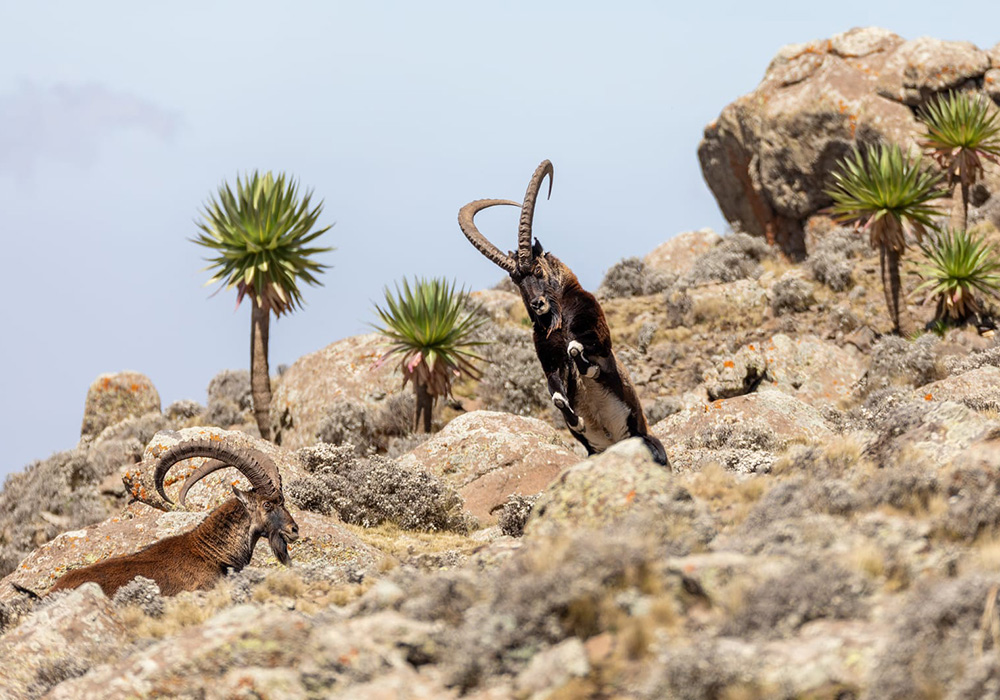
Chenek is one of the best places in the park to spot Walia ibex. At night, the altitude and the absence of light pollution turn the sky into something remarkable.
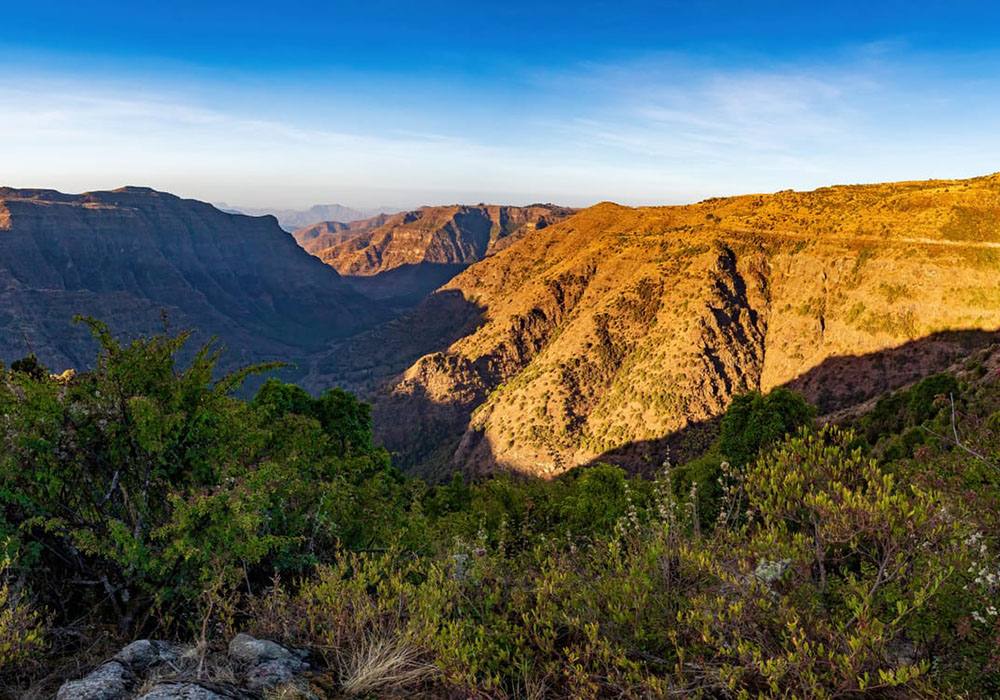
Ras Dashen
Ethiopia's highest point at 4,550 metres requires a long push, but the reward on a clear day is a view across the highlands that stretches for hundreds of kilometres.
Local villages
Communities like Geech, Chiro Leba, and Ambiko offer a genuine window into highland Ethiopian life. Residents farm barley and raise livestock on terraced slopes, much as they have for centuries.
Gelada baboons and endemic wildlife
The Simiens are home to the world's largest population of Gelada baboons. You'll often encounter them grazing in large groups near the trail. Lucky trekkers may also spot the Walia ibex, found only here, or the elusive Ethiopian wolf, one of the world's rarest canids.
Alpine flora
Above 3,000 metres, the vegetation shifts dramatically. Giant lobelias rise up to 10 metres tall, and open grasslands fill with wildflowers in spring.
Day-by-day: what a full crossing looks like
A classic crossing from Debark to Ras Dashen typically takes 7 to 10 days. The table below shows one common version of the itinerary; exact camps and distances vary with your guide, your pace, and any side trips.
| Day | Route segment | Distance | Altitude change | Highlights |
|---|---|---|---|---|
| 1 | Debark to Sankaber | 10 km | +700 m | First views, wildlife |
| 2 | Sankaber to Geech | 12 km | +600 m | Jinbar Waterfall, cliffs |
| 3 | Geech to Imet Gogo and back | 7 km | +350 / -350 m | Imet Gogo viewpoint |
| 4 | Geech to Chennek | 14 km | +500 / -700 m | Inatye peak, Walia ibex |
| 5 | Chennek to Ambiko | 18 km | -1,200 m | Village life, river crossings |
| 6 | Ambiko to Ras Dashen and back | 20 km | +1,400 / -1,400 m | Summit day |
| 7 | Ambiko to Chiro Leba or Mekarebya | 15 km | -700 m | Descent, rural scenery |
Rest days and side trips are always worth adding in. Rushing the route often means missing the journey for the sake of the destination.
What to pack for the Simien Mountains
Getting your kit right matters here. Weather changes fast, temperatures swing dramatically between day and night, and resupply options on the trail are minimal. The categories below cover the essentials.
Clothing:
- Quick-dry base layers (shirts and pants)
- Down or synthetic warm jacket for evenings and cold starts
- Rain jacket (carry this even in the dry season)
- Hat, gloves, and buff for cold mornings above 3,500 m
- Wide-brim sun hat and UV-rated sunglasses
- Well broken-in, waterproof hiking boots
- Camp sandals for relaxing in the evening
Sleeping:
- Sleeping bag rated to at least -5°C (23°F)
- Sleeping mat (some operators provide these; confirm in advance)
- Tent (typically supplied by tour operators)
Other essentials:
- Headlamp with spare batteries
- Water bottles or hydration bladder with a minimum 2-3 litre capacity
- Water purification tablets or a filter (streams are not reliably clean)
- High-energy snacks: trail mix, energy bars, dried fruit
- Personal first aid kit with any altitude medication your doctor recommends
- Biodegradable toiletries and toilet paper
- A camera or a phone with a good camera; the light in the Simiens is extraordinary
A few non-obvious packing tips worth noting:
- A waterproof pack cover or dry bags inside your main pack will protect gear when afternoon rain catches you off-guard.
- Zip-lock bags keep electronics, passports, and valuables dry and dust-free at all times.
- Trekking poles earn their weight on steep rocky descents, especially on the longer descent days.
Staying healthy and safe
Altitude sickness
Most camps are above 3,000 metres. Mild altitude sickness typically presents as headache, nausea, or fatigue. The standard management is simple: go slowly, hydrate consistently, and communicate with your guide if you feel unwell. If symptoms worsen or don't improve with rest, descending to a lower camp is the only safe option.
Food and water
Most organized treks are fully catered, with cooks preparing filling meals from staples like pasta, rice, vegetables, and eggs. If you have dietary restrictions or allergies, communicate these clearly when booking. All water must be boiled or treated; never drink directly from streams or rivers.
Weather
Mornings in the Simiens are usually clear and calm. Afternoon clouds build quickly, and rain is common from April through September. Nights at high camp are cold year-round, often dropping below freezing above 3,600 metres. Dress accordingly and keep rain gear accessible throughout the day.
Wildlife
The animals here are wild and should be treated as such. Don't approach or attempt to feed Gelada baboons; they may look relaxed, but they respond to crowding and sudden movements. Give all wildlife space.
Two safety points most trekkers overlook:
- UV exposure at altitude is intense, even on cloudy days. Apply high-SPF sunscreen in the morning and reapply throughout the day.
- Keep personal valuables in your daypack rather than in shared gear. Camps are safe, but things can easily get mixed up in group bags.
Simien Mountains trek vs. other African treks
How does a Simiens crossing measure up against other well-known African mountain routes?
| Feature | Simien Mountains | Mount Kilimanjaro | Drakensberg (South Africa) |
|---|---|---|---|
| Highest point | 4,550 m | 5,895 m | 3,482 m |
| Typical length | 7-10 days | 5-8 days | 2-7 days |
| Wildlife | Gelada baboon, Walia ibex | Few large mammals | Birds, antelope |
| Cultural exposure | Highland Amhara villages | Chagga villages | Zulu/Lesotho villages |
| Climbing style | Trekking, non-technical | Trekking, non-technical | Some scrambling |
The Simiens hold their own through sheer variety. The combination of dramatic scenery, endemic wildlife, and living cultural landscape is genuinely rare among the world's great trekking routes.
Cultural encounters along the trail
Meeting people along the route is one of the trek's most underrated pleasures. Most highland communities are Amhara farmers who grow barley and tend sheep and cattle on steep terraced plots. Children will often greet you with "Salam!" and may try out some English. In some villages, you might be offered injera (Ethiopian flatbread) or a spoonful of local honey; accepting graciously goes a long way.
Always ask before photographing people, and keep your camera lowered if someone declines. Small practical gifts, such as pens or exercise books, are appreciated by local families, though giving sweets or money to children is best avoided, as it can inadvertently encourage persistent begging.
A little linguistic effort also makes a difference. Learning a few words of Amharic, such as "Ameseginalehu" (thank you), signals genuine respect and tends to warm interactions considerably.
Choosing a tour operator or going independently
Most trekkers arrange their journey through a tour operator based in Addis Ababa, Gondar, or directly in Debark. A reputable operator handles permits, transport, guiding, food, and gear logistics. Daily rates vary considerably, from around $80 to $180 USD per person, depending on group size, the level of comfort, and what's included.
Independent arrangements are possible if you go directly through Debark, but they require more time, negotiation, and flexibility on the ground. Either way, a guide and scout are mandatory.
What to look for in a tour operator:
- Experienced, locally-based guides with verifiable knowledge of the route
- Strong reviews from recent travellers
- Quality camping gear (tents and sleeping equipment matter)
- Clear and honest communication about food, water, and health protocols
- Evidence of responsible and sustainable tourism practices
Common mistakes when booking:
- Choosing the cheapest option without checking recent traveller reviews
- Failing to ask about group size (larger groups move more slowly and have less flexibility)
- Not confirming exactly what gear is included in the quoted price
Budgeting for the Simien Mountains trek
Trekking costs here have risen over the years, but the Simiens remain competitive when compared with other world-class mountain routes.
| Item | Estimated cost (USD) | Notes |
|---|---|---|
| Park fees (7 days) | ~$50 | Paid at Debark park HQ |
| Guide (per day) | $25-30 | Shared across group |
| Scout (per day) | ~$15 | Required by law |
| Cook and mules (per day) | $25-40 | Optional but highly recommended |
| Food and gear | $15-25/day | If provided by operator |
| Transport to Debark | $20-50 | From Gondar or Axum |
A fully serviced 7-day trek typically runs between $600 and $1,200 USD per person.
Getting to the Simien Mountains
Most travellers reach the region via Gondar, which has daily domestic flights from Addis Ababa. From Gondar, it's a 2 to 3-hour drive to Debark, the park's gateway town. Shared minibuses run regularly on this route, or private transport can be arranged through tour operators. There is no public transport within the park itself, so all logistics, including mule hire for luggage, are coordinated from Debark.
Where to stay before and after the trek
In and near Debark: Debark has several budget options for the night before or after your trek. The Simien Park Hotel is a reliable if basic choice for trekkers, with en-suite rooms in its newer annexe offering hot water after a long day on the trail.
For a more comfortable experience, the award-winning Limalimo Lodge (limalimolodge.com) sits just 5 kilometres north of Debark on the escarpment edge. Voted number one in 2024 by Travel+Leisure, Limalimo was designed by architect Mario Balducci and is located on a 10-hectare site on the edge of Ethiopia's Simien escarpment. It's also deeply community-focused: Limalimo provides employment to more than 40 local community members, sources food from local producers, and donates $10 per person per night to the African Wildlife Foundation's conservation work. Book well in advance, as it fills up months ahead.
For those who prefer to stay inside the park itself, Simien Lodge is the highest lodge in Africa at 3,260 metres, offering comfortable tukul-style accommodation with remarkable views and regular Gelada baboon sightings on the grounds.
In Gondar: After the trek, Gondar is an excellent place to decompress. The city has a good range of accommodation from budget guesthouses to comfortable hotels, and its 17th-century Royal Enclosure castles are well worth an afternoon of exploration.
Practical tips for a successful trek
A few fundamentals that experienced trekkers keep close:
- Start slow. The first day or two on the trail are relatively easy, but the altitude can blindside you. Pace yourself from the beginning.
- Hydrate consistently. Dehydration accelerates the effects of altitude. Drink water throughout the day, even when you don't feel thirsty.
- Trust your guide. They know the weather patterns, the trail variations, and when conditions call for a change of plan.
- Carry Ethiopian birr in small denominations. Tips for guides, scouts, and cooks are customary and much appreciated. Local crafts can also be purchased from village sellers along the route.
- Stay flexible. Weather and trail conditions can shift quickly enough to change your daily plans. Build buffer days into your itinerary if you can.
- Dress modestly in villages. Conservative dress and respectful greetings are noticed and appreciated by highland communities.
A handful of insights that most pre-trek reading doesn't cover:
- Morning light at viewpoints is far superior to afternoon haze. Plan your schedule to reach key viewpoints in the first half of the day.
- Camp evenings are more social than you might expect. A deck of cards or a few stories to share with your guide and fellow trekkers will enrich the experience.
- Altitude suppresses appetite. Pack snacks you actually enjoy eating, not just calorie-dense options you'll end up ignoring.
- The summit of Ras Dashen matters, but it's possible to become so focused on the endpoint that you stop noticing what's happening around you. Slow down. The journey through the villages and along the escarpment is where the magic lives.
One of Africa's great treks, for good reason
Crossing the Simien Mountains on foot rewards the effort in ways that are difficult to articulate until you're standing on the edge of an escarpment watching the clouds move through a valley a thousand metres below you. The physical challenge is real. So is the altitude. So is the cold. But the combination of a landscape this dramatic, wildlife this rare, and human communities this genuine is hard to find anywhere else on the continent.
The Simiens are one of those places that demands a little surrender. You have to let the pace be what it is, accept that the weather will decide some things for you, and trust that slowing down is part of the experience, not an obstacle to it. Trekkers who approach this journey with patience and genuine curiosity tend to leave with something more than photographs. They leave with a changed understanding of what adventure actually means. Come prepared, move with care, and let this ancient landscape do the rest.
For more information on park rules and conservation efforts, visit the: