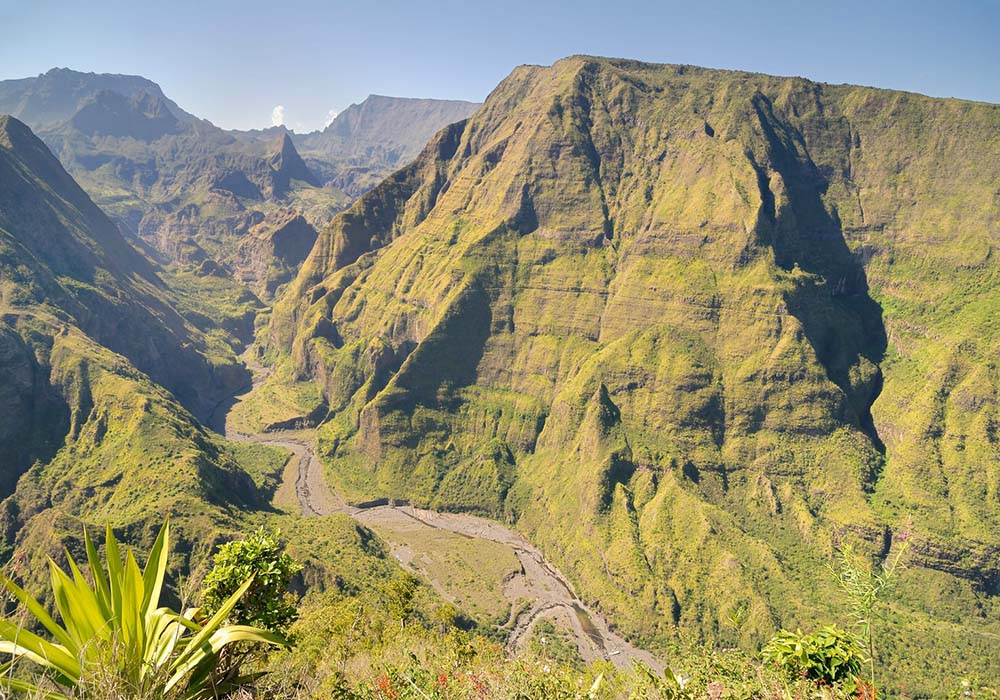
Réunion Island sits in the Indian Ocean like a secret the adventure world has been slow to share. With one of the planet's most active volcanoes, three dramatic cirques, lush rainforests, and a coastline split between white-sand lagoons and raw volcanic cliffs, this French overseas department delivers an extraordinary range of experiences. Add a vibrant Creole food scene and a kaleidoscope of cultural traditions, and you have a destination that earns its nickname: "the intense island."
Réunion Island sits roughly 800 kilometres east of Madagascar, tucked into the southwest Indian Ocean between Mauritius and the Malagasy coast. Despite its small footprint (just 2,500 square kilometres), this French overseas department packs in a staggering range of natural environments. Within a single day, you can stand on the rim of one of the world's most active volcanoes, wade through a waterfall-fed pool deep in a tropical cirque, and wrap up the afternoon snorkelling a coral lagoon as the sun drops into the sea.
Over 40 percent of the island is designated a UNESCO World Heritage Site, recognizing the extraordinary value of its "Pitons, Cirques and Remparts" landscape. The island has also been recognized by the World Travel Awards as the Indian Ocean's leading adventure tourism destination, leading beach destination, and leading green destination, with nominations in both 2024 and 2025. Réunion rewards travellers who go looking for something beyond the postcard, and that makes it one of the most genuinely exciting destinations on the planet right now.
A landscape like nowhere else
The terrain on Réunion changes fast and dramatically. You move from sea-level black-sand beaches to cloud-wreathed alpine ridges in the space of a short drive, and the diversity is genuinely disorienting in the best possible way.
Volcanic terrain and mountains
At the centre of everything is Réunion's volcanic identity. The island's highest point is Piton des Neiges at 3,071 metres, while Piton de la Fournaise, one of the world's most active volcanoes, rises to 2,632 metres on the island's southern flank, with access regulated based on activity levels.
Piton de la Fournaise rewards those willing to hike its alien terrain. The approach from Pas de Bellecombe–Jacob takes you through a mineral landscape of lava flows, tunnels, and secondary craters. The route is well-marked but can be closed during eruptions, so checking conditions the day before and setting out early is essential.
Piton des Neiges, by contrast, is quiet and covered in vegetation at its lower elevations, giving way to stark alpine scenery near the summit. Standing at the top on a clear morning, with the island spread below and the Indian Ocean shimmering at its edges, is one of those travel moments that stays with you.
| Mountain | Height (m) | Status | Key experience |
|---|---|---|---|
| Piton de la Fournaise | 2,632 | Active | Lava flows, volcanic craters, lunar landscapes |
| Piton des Neiges | 3,071 | Extinct | Summit trekking, panoramic views, alpine flora |
The three cirques: Réunion's beating heart
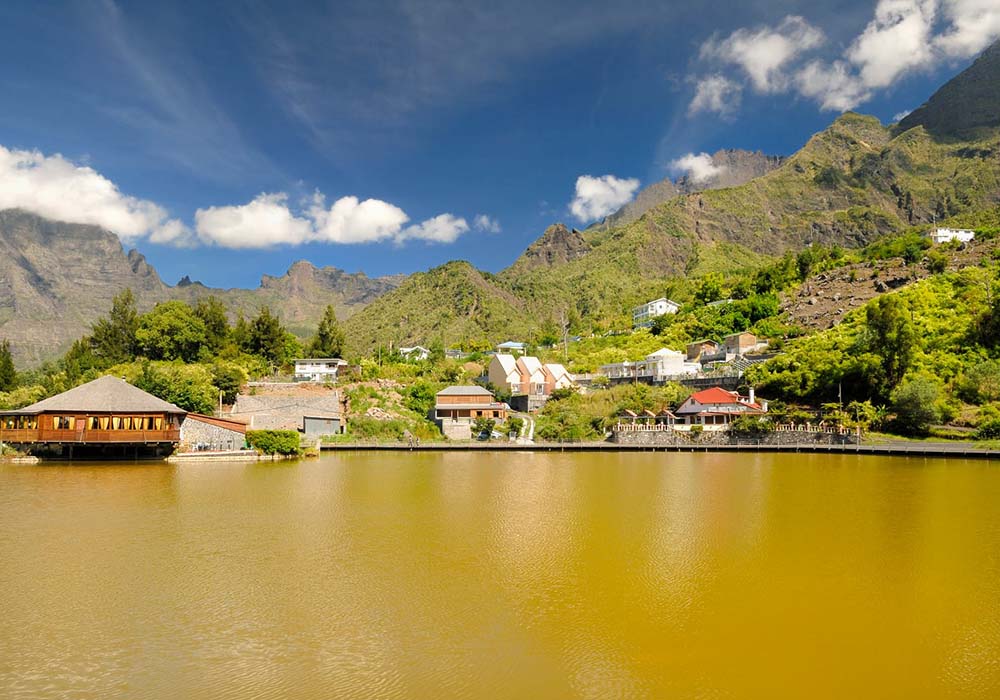
Piton des Neiges once gave birth to Réunion itself. Its collapse formed three calderas known as cirques: Mafate, Salazie, and Cilaos. These peaks, ridges, and valleys have become magnificent hiking destinations attracting adventurers from around the world.
Mafate, the most famous of the three, was historically a refuge for people escaping slavery, who chose the inner mountains as protection. It remains accessible only by foot or by helicopter. That physical isolation is a large part of its appeal. Guesthouses, or gîtes, tucked into small villages offer simple but memorable stays for multi-day trekkers.
Cilaos is reached via a road with 400 hairpin bends, climbing to thermal baths, vineyards, and mountain ridges, while Salazie is known for its waterfalls and traditional farming life.
Lush rainforests and waterfalls
Réunion's interior rainforests thrive in the island's tropical moisture. The island's interior has recorded some of the planet's highest rainfalls, which explains the density and richness of the forest ecosystems. Walking through the canopy here, past endemic orchids, tree ferns, and rare palms, feels genuinely removed from the modern world.
Several waterfalls are accessible by trail, ranging from gentle walks to serious climbs:
- Grand Galet: a dramatic cascade in the Langevin Valley, surrounded by lush vegetation
- Voile de la Mariée (Bride's Veil): a slender, elegant fall visible from the road into Salazie
- Chute de la Rivière Langevin: popular for natural swimming pools fed by cool mountain water
These waterfall trails suit a range of fitness levels, and the payoff at each destination is considerable.
Beaches and coastline
Réunion's beaches span thirty kilometres of coastline, blending white and black sands, with around twenty-two kilometres sheltered by vibrant coral reefs in calm lagoons. The contrast between the protected western lagoons and the raw volcanic southern coast couldn't be more dramatic.
Popular coastal spots include:
- Boucan Canot: a wide ocean beach with strong surf energy and a lively beachfront scene
- L'Hermitage/La Saline-les-Bains: calm lagoon waters, ideal for snorkelling families
- Saint-Leu: a great all-rounder combining a sheltered lagoon, paragliders landing on the sand, and access to excellent surf breaks
- Grande Anse: a sweeping black-sand beach framed by striking cliffs
Thrilling outdoor activities
Réunion's terrain creates near-perfect conditions for a wide range of outdoor pursuits. The combination of elevation change, warm coastal waters, reliable trade winds, and varied forest cover means there's genuinely something for every type of active traveller.
Hiking and trekking
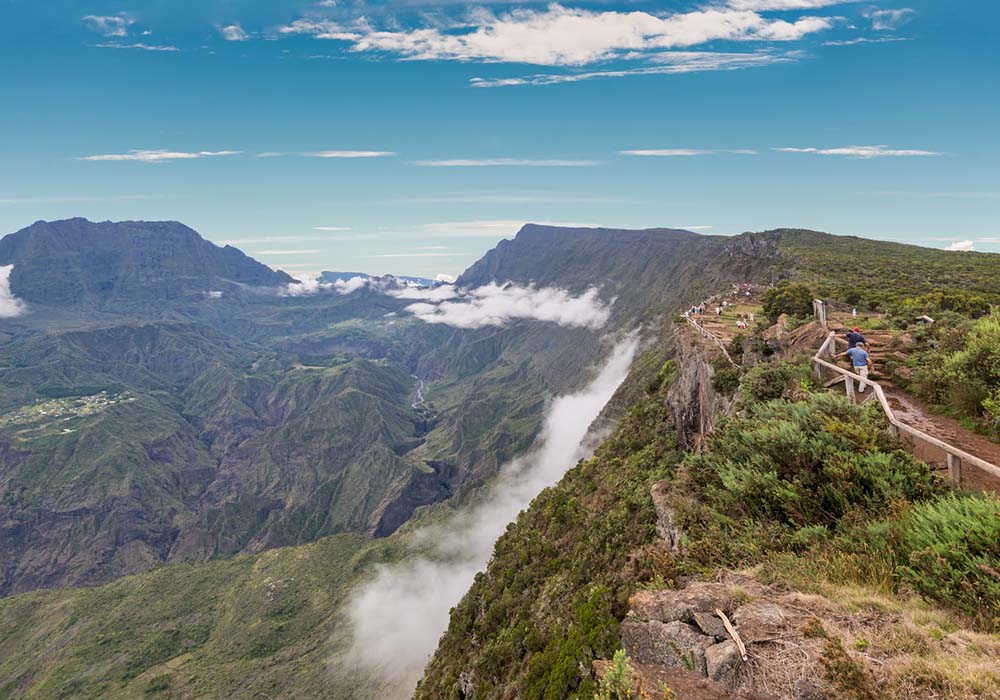
The island's trail network is extensive and well-maintained, with difficulty levels ranging from accessible valley walks to serious multi-day expeditions. Hiking here opens up landscapes that are completely inaccessible by road.
Key trails include:
- Cirque de Mafate: a remote, car-free zone accessible only on foot or by helicopter, with overnight guesthouses and extraordinary scenery
- Piton de la Fournaise circuit: a medium-grade volcanic hike across lava fields and around secondary craters
- Cirque de Salazie: easier terrain with big waterfall rewards and lush tropical vegetation
| Trail | Difficulty | Approx. length | Highlights |
|---|---|---|---|
| Circuit de Mafate | Hard | 20–30 km | Remote villages, volcanic landscapes |
| Piton de la Fournaise | Medium | 10–15 km | Active volcano, lava fields |
| Cirque de Salazie | Easy to medium | 8–12 km | Waterfalls, tropical forest |
Practical tips for hiking Réunion:
- Start early to beat the afternoon heat and take advantage of clearer mountain visibility
- Carry more water than you think you'll need
- Wear sturdy, ankle-supporting footwear on rocky volcanic paths
- Check the current trail and volcano alert status before heading out, as conditions can change without warning
Paragliding and skydiving
Saint-Leu is particularly well-suited to paragliding, with paragliders regularly landing on the beach sand after flying over the lagoon. The site benefits from consistent trade winds and clear views across the Indian Ocean. La Grande Chaloupe offers an alternative launch site with more coastal scenery.
Skydiving gives you a bird's-eye view of the volcanoes, cirques, and coastline simultaneously. Tandem jumps are available for first-timers, guided by experienced instructors who operate under strict safety standards. Both activities suit beginners: full training and briefings are included before launch.
The appeal is obvious. Floating above lush valleys and turquoise water in the same jump is an experience few destinations on Earth can offer.
Water sports and diving
On the western side, the coral reef creates a calm, clear lagoon perfect for swimming, paddling, and observing tropical fish. Further south, the coastline becomes more dramatic, with cliffs, frozen lava flows, and viewpoints swept by trade winds.
The island's surf scene is centred around Saint-Gilles and Saint-Leu, with consistent swells from May to September attracting intermediate and advanced surfers. Snorkelling the lagoon near Saint-Gilles-les-Bains is accessible year-round, while scuba diving takes you to reef sites where colourful fish, sea turtles, and even dolphins make appearances.
Humpback whales visit seasonally, delighting marine enthusiasts with offshore sightings that can sometimes be spotted from the shore.
| Activity | Best locations | Skill level | Best season |
|---|---|---|---|
| Surfing | Saint-Gilles, Saint-Leu | Intermediate to expert | May to September |
| Snorkelling | Lagoon near Saint-Gilles-les-Bains | All levels | Year-round |
| Scuba diving | Reef sites around the island | Beginner to expert | Year-round |
| Paragliding | Saint-Leu, La Grande Chaloupe | All levels (tandem) | Year-round |
Rich cultural experiences
Réunion's cultural identity is one of the most layered and genuinely fascinating in the Indian Ocean. The island's history brought together African, Indian, Chinese, and European communities, and the result is a living culture where those influences blend fluidly in everyday life. Islanders are mostly Creole, and sugar, rum, vanilla, essential oils, and seafood are deeply woven into daily identity and tradition.
Diverse heritage and traditions
The island's cultural mosaic shows up in everything from architecture to music. African heritage is expressed through traditional forms like maloya and sega, rhythmic music styles that carry deep historical significance for Réunion's Creole population. Indian roots surface in religious ceremonies, temple festivals, and the prevalence of Tamil traditions. The Chinese community contributes its own culinary and festive customs, while European (primarily French) influence shapes the language, governance, and urban architecture.
| Culture | Key traditions | Examples |
|---|---|---|
| African/Creole | Music, dance, storytelling | Maloya music, sega dance |
| Indian | Religious ceremonies, festivals | Diwali, Tamil prayer traditions |
| Chinese | New Year festivities, cuisine | Dragon dances, traditional banquets |
| European | Language, architecture | French language, colonial buildings |
Local cuisine and markets
Réunion's food reflects its multicultural heritage through signature dishes like cari (Creole curry), rougail saucisse (a hearty sausage stew), and Cilaos-grown lentils. Street food culture is vibrant, with bouchons (steamed meat dumplings), samoussas, bonbons piment (spicy chickpea snacks), and a seemingly infinite range of cari variants built around chicken, fish, pork, or even octopus.
Markets are where you experience the full sensory range of the island's food culture. The Saint-Paul market on the west coast sets up every Friday and Saturday morning on the seafront esplanade, with dozens of stalls selling exotic fruits, locally grown vanilla, "péi" honey, spices, and Creole street food alongside arts and crafts. Arrive early: the best produce and the best atmosphere both peak before the heat of mid-morning.
The Saint-Pierre market, held on Saturday mornings in the south, is considered the island's foodie hub, combining an excellent food offer with a relaxed waterfront atmosphere ideal for extending into a full morning out.
| Market | Location | When | Specialities |
|---|---|---|---|
| Saint-Paul market | West coast seafront | Friday all day, Saturday morning | Fruits, vanilla, spices, Creole street food, crafts |
| Saint-Pierre market | South, city centre | Saturday morning | Spices, seafood, local produce, pareos |
| Le Chaudron market | Sainte-Clotilde, north | Wednesday and Sunday | Every day local produce, neighbourhood atmosphere |
Wildlife and nature encounters
Unique flora and fauna
Réunion hosts more than 800 endemic species, a figure that reflects the island's volcanic origins and the isolation that allowed unique forms of life to evolve here over millions of years. The national park, itself a UNESCO World Heritage Site, protects much of this biodiversity.
Bird life is a particular draw for wildlife watchers. The Réunion Harrier and Réunion Cuckooshrike are two endemic species worth seeking out, while Barau's Petrel and Audubon's Shearwater attract dedicated birders. The island's altitude zones each host distinct communities of plants and animals:
| Altitude zone | Key flora | Key fauna |
|---|---|---|
| Coastal areas | Casuarina trees, tropical shrubs | Seabirds, geckos |
| Mid-elevation forests | Endemic orchids, ferns | Réunion Harrier, endemic insects |
| High mountain zones | Alpine grasses, shrubs | Rare birds, small reptiles |
Marine life
The island's marine environment hosts turtles, whales, and dolphins, along with a diverse range of reef fish and coral formations. Green and hawksbill turtles are regularly seen in coastal waters, and seasonal humpback whale sightings are a genuine highlight for visitors between July and October.
Popular marine areas include:
- Saint-Gilles-les-Bains lagoon: calm and shallow, excellent for snorkelling beginners
- Cap Méchant: dramatic lava cliff coastline with rich biodiversity
- L'Étang-Salé: black-sand beach known for diverse sea life and a quieter atmosphere
Getting there and getting around
Flights and connectivity
The main arrival point is Roland Garros Airport (RUN), near the capital Saint-Denis. Direct flights connect Réunion to Paris, Mauritius, and other regional hubs, with the journey from Paris taking approximately 11 hours and connections from Mauritius taking just 40 minutes. Flights from Johannesburg are also available several times a week.
| City | Approx. flight duration | Frequency |
|---|---|---|
| Paris | ~11 hours | Daily |
| Johannesburg | ~6 hours | Several times per week |
| Mauritius | ~40 minutes | Multiple daily |
Getting around
Public buses run regularly between Saint-Denis and Saint-Pierre along the coast, but reaching interior destinations like Cilaos or Hell-Bourg by public transport is challenging. Most visitors find rental cars or organized tours considerably more practical. A 4x4 is useful for accessing more remote trailheads, particularly in the south and highlands.
Réunion has some of the best road infrastructure of any island in the Indian Ocean, including what is reportedly the most expensive road construction project in French territory, a coastal highway carved into the cliffside north of Saint-Denis.
Accommodation
Réunion offers a genuine range of lodging, from simple budget guesthouses to comfortable mid-range hotels and nature-focused eco-lodges. For hikers tackling the cirques, mountain gîtes (simple lodges) provide overnight stays inside Mafate and other trail zones, booking up well in advance during peak season.
| Accommodation type | Price range (per night) | Best for |
|---|---|---|
| Hostels and guesthouses | €15–€30 | Solo travellers, backpackers |
| Mid-range hotels | €50–€100 | Couples, small groups |
| Mountain gîtes | €30–€60 | Hikers, multi-day trekkers |
| Eco-lodges | €40–€80 | Nature-focused travellers |
Book early, particularly for the dry season (May to October), which is the most popular period for outdoor activities. Many mountain gîtes in Mafate fill weeks in advance.
The best time to visit
Every month has its appeal on Réunion. The austral summer rainy season (November to April) brings lush landscapes and full waterfalls, with coastal temperatures around 26–30°C. The austral winter (May to October) offers cooler, drier conditions ideal for hiking, with mountain temperatures dropping to 10–15°C at altitude and coastal weather settling into a comfortable 20–25°C. Shoulder seasons in April/May and October/November offer a balance of pleasant weather and fewer crowds.
Where the real world fades out
Réunion earns its nickname as "the intense island" across every dimension of a visit. The physical landscape alone would justify the journey: an active volcano, three enormous cirques carved by ancient eruptions, a rainforest interior recording some of the planet's highest rainfall, and a coastline alternating between calm reef-protected lagoons and raw volcanic drama. Layer in the trails, the marine life, the paragliding, the surf, and the lava tunnels, and it becomes clear why adventurous travellers who discover this island often struggle to name anywhere they'd rather be.
What makes Réunion genuinely distinctive, though, is that the cultural experience runs equally deep. The food markets pulse with colour and flavour. The festivals carry real historical weight. The Creole, Indian, Chinese, African, and European threads of island life are woven together in a way that took generations to develop and reward any traveller patient enough to slow down and pay attention. Réunion delivers on every front: the trails, the ocean, the cuisine, the community. Start planning, and give yourself enough time to do it properly. Eight to twelve days is ideal; less and you'll leave with a list of things you wish you'd done.